You want to help an animal, but you are not sure whether you are ready to make a permanent commitment. Maybe you have the time to care for a dog or cat for a few weeks, but you are not sure about bringing one home for years. That is where the choice between foster vs adopt becomes important. Both options give animals a safer place to stay, but the responsibility and length of care are quite different.
Foster or Adopt? The Main Difference
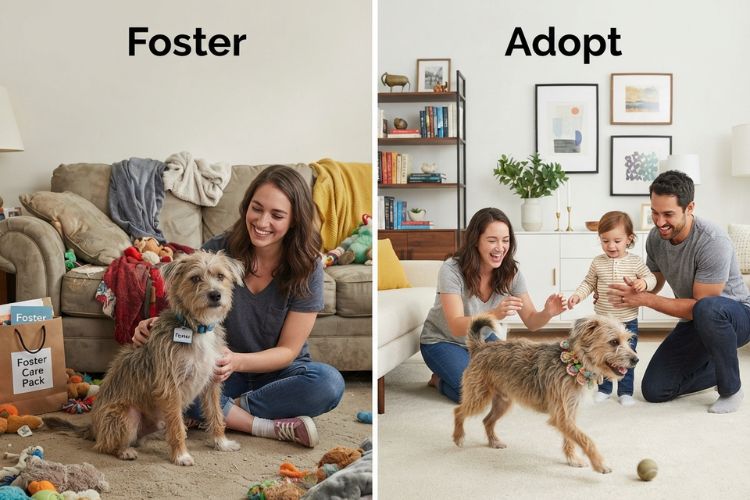
The simplest difference between fostering and adoption is how long the animal stays with you. Fostering means providing a temporary home while a shelter or rescue organization works toward the animal’s next placement. Adoption means taking responsibility for the pet as a permanent member of your household.
The biggest change is what happens after the animal leaves your care. With fostering, the arrangement is temporary. A pet may stay with you while waiting for adoption, recovering from a health problem, or getting ready for a new home. The rescue usually remains involved throughout the process. With adoption, the pet becomes your permanent responsibility, including their daily care, training, exercise, and health needs.
What Is It Like to Foster a Pet?
Fostering is more than simply giving an animal somewhere to sleep. Depending on the pet, you may handle feeding, walks, medication, basic training, socialization, and regular updates for the rescue. Some animals only need a quiet place to relax, while others need more hands-on care.
The good thing is that foster arrangements often come with guidance. Some organizations provide food, supplies, medication, veterinary care, or other support, although this varies. Before agreeing to foster a pet, ask exactly what the shelter or rescue expects you to provide and what expenses it will cover.
Why Some Animals Need a Foster Home?
A kennel is not the best environment for every animal. A frightened dog may become more relaxed in a home, while a young kitten may need care that is difficult to provide in a busy shelter. Animals recovering from illness or surgery can also benefit from a calm place to rest.
A foster home can reveal things that may not be obvious in a shelter setting. A dog may show how they react to visitors, while a cat’s foster family can see whether they use the litter box consistently. Even small details, such as how an animal behaves when left alone, can help the rescue understand their personality and find a home that suits them.
If you want to understand how Pet rescue works, foster care is an important part of the process. Foster caregivers give animals time to adjust while providing useful information that can make their eventual placement a better fit.
What Changes When You Adopt?
Bringing a pet home is only the beginning. Once you adopt a pet, you become responsible for their care on ordinary days as well as when something unexpected comes up. Food, exercise, training, grooming, veterinary visits, and other expenses all become part of your routine. Adoption fees and support also vary between shelters and rescue groups.
Your new pet may not settle in straight away. They could need time to learn the household routine, get used to new people, or adjust to other animals. Giving them space during this period can make the transition easier. Before you adopt, think about whether your home, schedule, and budget can support the animal for the long term.
Foster vs Adopt in Everyday Life
Looking at foster vs adopt from a practical angle can make the decision easier.
| Consideration | Foster | Adopt |
| Length of care | Temporary | Long term |
| Main purpose | Support an animal until the next placement | Give an animal a permanent home |
| Organization involvement | Usually continues during foster care | Usually strongest during adoption |
| Daily care | Depends on the animal | Ongoing responsibility |
| Expenses | Some may be covered by the organization | Usually handled by the adopter |
| Emotional side | You may eventually say goodbye | You build a lasting relationship |
Policies are not identical everywhere, so do not assume that every rescue handles fostering in the same way. Ask questions before making a commitment.
Which Animals Often Do Better in Foster Care?
Some pets are placed in foster homes because they are struggling in a shelter environment. Others may be too young for adoption, recovering from an injury, dealing with a medical condition, or needing extra socialization. Foster care can give these animals time to develop before they move into a permanent home.
This is one reason foster vs adopt is not really about which option helps more. The two serve different purposes. A foster caregiver may help an animal reach the point where adoption becomes possible, while an adopter provides the long-term home that comes afterward.
Not Ready for a Permanent Pet?
If you like the idea of having an animal around but are unsure about a lifelong commitment, fostering may be worth considering. It can give you experience with feeding schedules, exercise, training, household routines, and the practical side of caring for a pet.
But fostering should not be treated as an easy trial with no responsibility. The animal still depends on you for daily care, and you may become emotionally attached. Saying goodbye can be difficult, even when you know the pet is moving to a good home.
When Is Adoption the Better Choice?
Adoption may make more sense when you are ready to make a long-term commitment. Your housing should allow pets, your schedule should leave enough time for daily care, and you should have a realistic plan for food, veterinary treatment, training, and other expenses.
Think about your lifestyle too. A high-energy dog may need more exercise than you can provide, while an older cat may fit better into a quieter home. If you already have pets or children, their needs should also be part of the decision.
Questions to Ask Before You Commit
Whether you choose to foster vs adopt, get the practical details first. Ask the organization about the animal’s health, behavior, routine, and known needs.
You may also want to ask:
- Who pays for veterinary treatment?
- Are food, medication, crates, litter, or other supplies provided?
- How long might the foster placement last?
- What should you do if the animal becomes sick?
- Can foster caregivers communicate with potential adopters?
- What happens if the foster arrangement is not working?
- Can you adopt the animal later?
These questions can prevent confusion and help you understand what you are agreeing to.
What About the Cost and Time?
Before deciding, think about what you can realistically manage. Foster programs may cover some expenses, while adoption usually includes an adoption fee and ongoing costs. The exact support depends on the organization.
The time commitment is different too. A foster placement may last days, weeks, or longer based on the animal’s needs. Adoption has no set end date, so you need to be ready for the responsibility that comes with caring for a pet over the years.
If you are Preparing for a rescue dog, think beyond those first few days. Consider where the dog will sleep, how much exercise they need, who will care for them when you are away, and how you will manage training and vet visits.
Can a Foster Pet Become Your Permanent Pet?
Sometimes a foster caregiver realizes that the temporary arrangement feels like the right permanent match. This is often called a “foster fail,” although there is nothing unsuccessful about giving an animal a permanent home. Some organizations allow foster caregivers to adopt, but their normal adoption procedures may still apply.
Fostering can also help you understand an animal beyond what you see at a shelter. You may learn its habits, personality, energy level, and comfort around people. That information can make a future adoption decision more informed.
So, Should I Foster or Adopt a Pet?

The question of whether to foster or adopt a pet does not have one answer for everyone. If you have room in your home and can provide temporary care, fostering can be a practical way to help an animal without making a permanent commitment.
If you are ready to take responsibility for a pet for the long term, adoption may be the better choice. Before deciding, consider your schedule, housing, finances, family, existing pets, and ability to handle unexpected challenges.
Someone searching for a No-kill animal shelter may also find that the organization offers both foster and adoption programs. Ask how its program works rather than assuming every shelter follows the same rules.
Final Thoughts
There is no need to rush this decision just because an animal needs a home. Take an honest look at your schedule, living situation, budget, and how much responsibility you can handle. Foster vs adopt is not about choosing the better option. It is about choosing what you can genuinely commit to.
Fostering gives an animal a safe place for a while, while adoption offers a permanent home. If you are still wondering whether to foster or adopt a pet, think about what you can provide now rather than what you wish you could manage. A realistic choice is more likely to work well for both you and the animal.
If you are looking for a local organization to foster or adopt through, North Bay Animal Services offers both options for animals in need of temporary or permanent homes. The organization is a nonprofit animal shelter serving Sonoma County and provides shelter, medical care, enrichment, and support for animals waiting for the right home.
FAQs
Is fostering easier than adopting?
Not necessarily. Fostering may be a smaller commitment, but the animal still needs daily care, attention, patience, and sometimes medical care.e
Can I foster if I have other pets?
Possibly. The rescue may consider your current pets, home setup, and the temperament of the animal before approving a placement.
Can I adopt my foster pet?
Often, this may be possible, but it depends on the organization’s policies and the animal’s adoption process.
How long does foster care usually last?
There is no universal timeframe. It can depend on the animal’s health, age, behavior, availability of adopters, and placement needs.
What is the biggest difference between fostering and adoption?
The main difference between fostering and adoption is the intended length of care. Foster care is temporary, while adoption is meant to provide a permanent home.