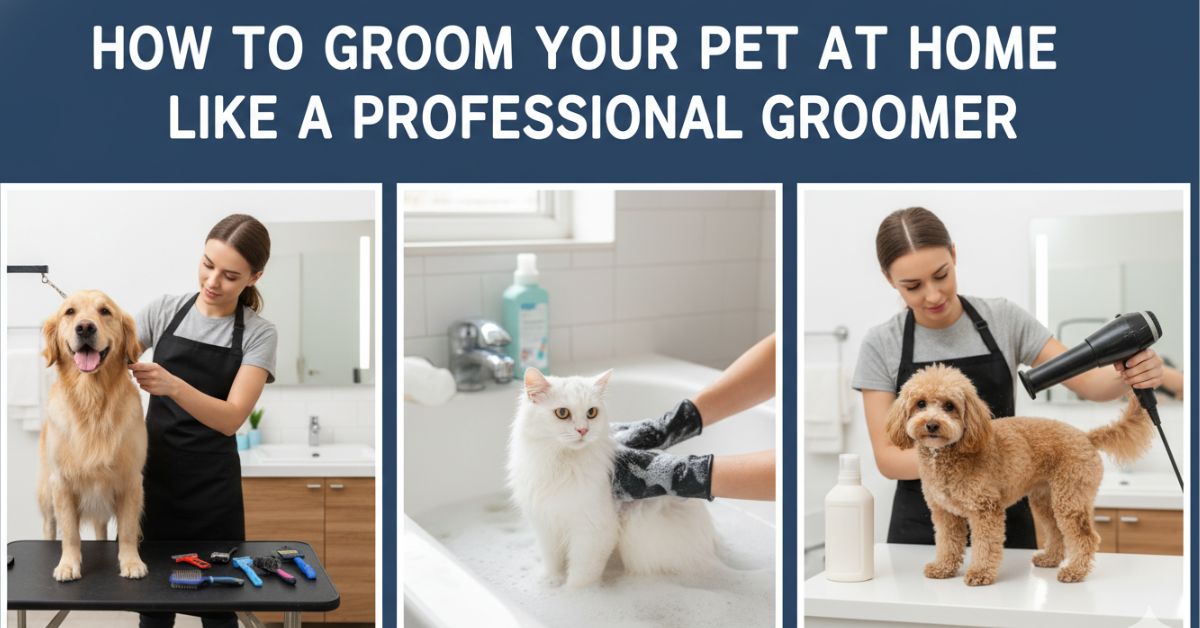
Learning how to handle grooming your pet at home can make a huge difference in your pet’s comfort, hygiene, and overall health. Regular grooming keeps fur clean, reduces shedding, prevents painful mats, and helps owners notice skin problems or irritation early. While many pet owners rely on professional groomers, basic grooming tasks can often be managed at home with patience, practice, and the right tools.
One of the biggest benefits of pet grooming at home is that it creates a calmer and more familiar experience for pets. It also helps owners build trust while keeping up with regular care between professional appointments. In this guide, we’ll cover brushing, bathing, nail trimming, ear cleaning, dental care, and simple techniques that can help you groom your pet more confidently at home.
First, Set Up a Quiet Grooming Area
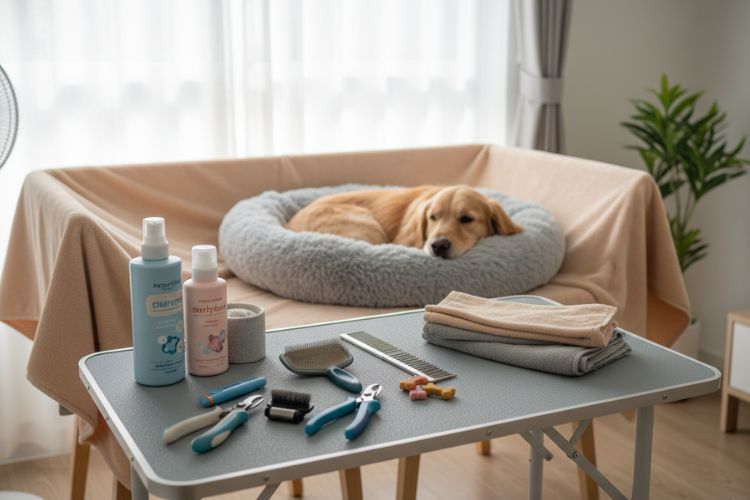
Prior to grooming, select a place that will ensure safety and relaxation for your pets. Ensure that all the items required, such as towels, brushes, shampoo, nail clippers, and treats, are available to avoid interruption mid-grooming session.
Pets tend to fear grooming equipment if they have never been exposed to handling before. Gradual exposure through light touch of their paws, ears, and fur should be encouraged. Treats and praise will allow pets to associate grooming sessions with a good experience.
Patience and calmness play a very important role during grooming, even more than the equipment itself.
Grooming Supplies You May Need
A professional dog groomer uses various tools depending on the dog’s fur type and requirements. Basic supplies that you can use are:
- Slicker brush or rubber brush
- Steel comb
- De-shedding tool
- Shampoo and conditioner for dogs
- Microfiber towel
- Dog nail clippers or nail grinder
- Styptic powder for accidental nail bleeding
- Dog toothbrush and toothpaste
- Soft cloth or cotton balls
- Scissors or clippers, along with guide combs
It is extremely necessary to choose pet-friendly products because human shampoos or toothpaste can irritate the skin of the dog or affect its stomach.
Understand Your Pet’s Coat Type
Different types of fur will mean different grooming habits. For example, a short-haired pet would typically be brushed once weekly to get rid of shedding fur and distribute natural oil across the fur. For long or curly fur, your pet needs to be brushed often.
Double coats of dogs like the Labrador and Husky may even need to be de-shedded during their heavy shedding period. This information can make it much simpler for you to groom your pets at home while avoiding skin irritation through improper brushing technique.
Brush the Coat Before Bath Time
Brushing before bathing helps remove loose fur, dirt, and tangles that can become worse once wet. Start brushing gently in small sections rather than pulling through the entire coat too quickly.
One of the most useful pet grooming tips is to work slowly around tangled areas and avoid pulling harshly on the fur. Detangling sprays or conditioners can also help loosen small mats safely.
Regular brushing not only keeps the coat cleaner but also helps reduce shedding around the home.
Keep Teeth and Ears Clean
Dental hygiene is usually neglected in grooming practices, but good oral hygiene plays a significant role in maintaining the health of the whole body. Brush your pet’s teeth a few times weekly using pet-friendly toothpaste and a brush.
Ear cleaning should be done regularly, especially among the droopy-eared breeds. You can clean your dog’s ears by using pet-safe ear drops and some cotton balls. An infected ear will have discharge and other signs such as swelling, redness, and an unpleasant smell coming out of it.
In addition to regular grooming activities, other maintenance practices, including following the pet vaccination schedule, will benefit your furry companion’s general well-being.
Bathing Your Pet the Right Way
Use lukewarm water and a shampoo made specifically for pets. Wet the coat fully, gently massage the shampoo into the fur, and rinse thoroughly to prevent product buildup on the skin.
Shampoo should not get into their eyes or ears. The part of their body that should not be washed with water includes the head area, which can be done using a piece of cloth. When bathing your animal, it is important that you try to make the experience calm and comfortable.
Trim Fur Carefully
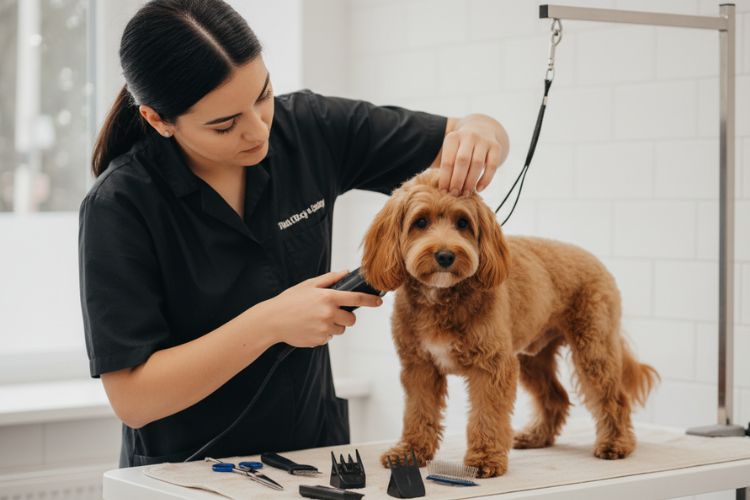
Some pets may need light trimming around the paws, eyes, or sanitary areas. Use round-tip scissors or clippers with guard combs for added safety.
Avoid cutting too close to the skin, especially if you are inexperienced with clippers. Major haircuts or breed-specific styles are often better handled by professional groomers.
If your pet has severe mats or skin irritation hidden beneath the fur, it may also be safer to seek professional help instead of trimming aggressively at home.
Nail Care Matters More Than Many Owners Realize
Long nails can affect the way pets walk and may even cause discomfort over time. Most pets need nail trims every few weeks, although activity levels and walking surfaces can affect nail growth.
Trim small amounts at a time and avoid cutting the quick, which is the sensitive blood vessel inside the nail. If accidental bleeding happens, styptic powder can help stop it quickly.
Among the most overlooked pet grooming tips is introducing nail trims slowly. Many pets tolerate nail care better when owners trim one or two nails at a time instead of rushing through the process.
Make Grooming a Positive Routine
The more consistent you are, the easier grooming usually becomes. Short and calm grooming sessions help pets feel more comfortable and prevent stress from building up.
Treats, praise, and gentle handling can help pets stay relaxed during brushing, bathing, and nail trimming. Over time, grooming your pets becomes less stressful and more routine for both owners and animals.
It is also helpful to learn basic pet first aid tips so you can handle small grooming-related accidents, such as minor nail bleeding or skin irritation, safely at home.
Conclusion
With patience and practice, grooming your pet at home can become much easier and less stressful over time. Brushing, bathing, nail cutting, and teeth cleaning are some activities that keep pets healthy, happy, and clean before visiting a professional groomer.
Home pet grooming not only helps pet owners establish a bond with their animals but also enables them to detect potential health problems among their pets. Using proper techniques, pet owners can safely perform many grooming procedures at home without causing discomfort to their pets.
For pet owners who still need extra support, guidance, or reliable animal care resources, organizations like North Bay Animal Services can help families better navigate everyday pet care and create healthier routines for their pets.
FAQs
How often should I groom my pet at home?
It depends on the breed and hair type, but most pets will need frequent brushing, once or twice a week. Bathe them only a few times each month.
What tools are needed for pet grooming at home?
For starters, you need some brushes or combs. You also need a mild dog shampoo, nail clippers, pet toothpaste, toothbrush, towels, and ear-cleaning equipment. For long-haired breeds, you may require scissors and detangling tools.
Is grooming your pet at home safe for beginners?
In fact, you can perform basic grooming activities at home, such as combing, washing, and basic nail clipping, without problems. If the dog has matted fur or skin conditions, you may need the help of a professional groomer.