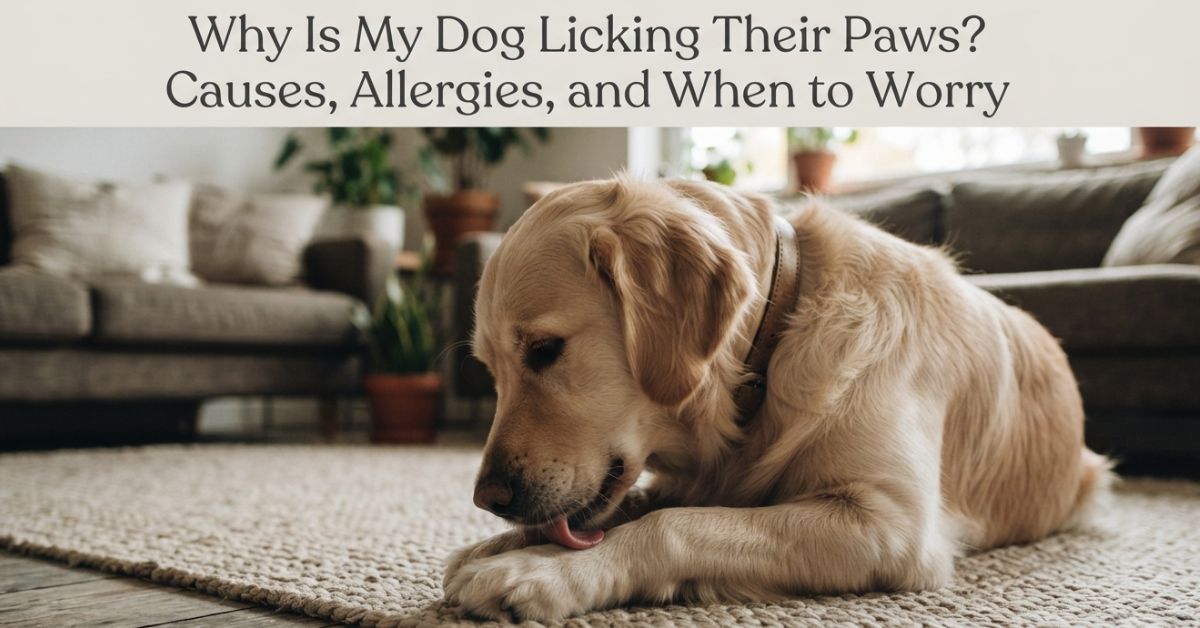
A dog may lick its paws after a walk, while cleaning itself, or simply out of habit. Occasional licking is usually nothing unusual. The concern starts when the behavior becomes frequent, intense, or focused on one particular paw.
If you notice your dog licking their paws throughout the day, there may be an underlying reason. Allergies are common, but injuries, infections, parasites, pain, and even stress can also lead to repeated licking. Understanding the pattern can help you decide when your dog needs a closer look.
When Paw Licking Is Normal
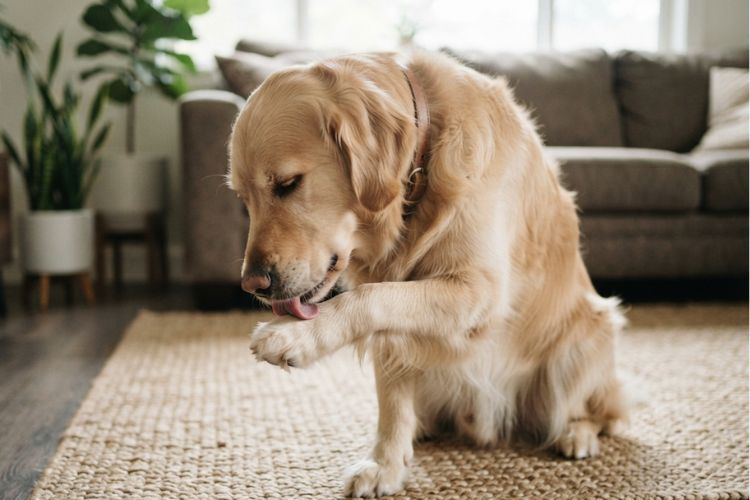
Dogs use their mouths to groom themselves, so some licking is part of normal behavior. A dog may clean its paws after coming inside from outdoors or remove dirt after playing.
The situation is different when paw licking in dogs becomes difficult to interrupt. Red skin, hair loss, swelling, sores, or constant attention to the same area suggest that something is bothering your pet. The amount of licking matters, but so does what the paw looks like afterward.
If your dog suddenly starts focusing on one paw, check it before assuming allergies are responsible. A small cut, broken nail, thorn, grass seed, or irritated paw pad may be enough to cause discomfort.
Check the Paw for an Obvious Problem
Before looking at more complicated causes, take a careful look at your dog’s feet. Outdoor walks can expose paws to sharp objects, hot pavement, chemicals, and rough surfaces.
Look between the toes and around the pads for cuts, swelling, cracks, redness, or anything stuck in the skin. Check the nails too. A split or damaged nail can be painful and may lead to repeated licking.
Seasonal conditions can also affect the feet. Hot pavement can irritate paw pads, while road salt and de-icing products can cause discomfort during colder weather. If dog chewing paws starts suddenly after being outdoors, an environmental irritant or minor injury may be worth considering.
Allergies Can Make Paws Very Itchy
Allergies are one of the common reasons dogs develop itchy feet. A dog may react to pollen, grass, mold, dust mites, or other substances in its environment. Food allergies can also cause skin problems, although they are not the only explanation for itchy paws.
Environmental Allergies
Dogs with environmental allergies may lick their feet after spending time outside. They may also scratch their ears, rub their face, or develop irritation on the belly and other areas.
Seasonal patterns can provide useful clues. For example, a dog that becomes much itchier during certain times of the year may be reacting to something in its surroundings.
Food-Related Allergies
Food allergies can cause ongoing itching and skin irritation. Some dogs may also develop digestive symptoms, although skin problems are often more noticeable.
Finding a food allergy is not as simple as changing food several times. A veterinarian may recommend a controlled elimination diet to determine whether a particular ingredient is contributing to the problem.
Flea Allergies
A single flea bite can trigger intense itching in a sensitive dog. You may not see fleas easily, especially if your dog is grooming frequently. Consistent parasite prevention is therefore important even when there are no obvious fleas.
Infections Can Keep the Problem Going
Constant licking can leave the skin sore and irritated, making it easier for bacteria or yeast to grow. What starts as a small itchy spot can quickly become more uncomfortable if your dog keeps licking or chewing the area.
Look for redness, swelling, moisture, discharge, an unusual smell, or dark staining around the toes. Some dogs also develop sore, inflamed skin between their toes, which can make walking uncomfortable. Once an infection develops, the itching can lead to even more licking, so treating the infection may not be enough if an allergy or another underlying issue is also causing the problem.
Pain May Be the Real Reason
Not every case of Dog Licking Their Paws is caused by itching. Pain can also change a dog’s behavior. A damaged nail, sore paw pad, joint problem, or other injury may cause your dog to focus on a particular foot.
Pay attention to what happens when your dog walks. Limping, avoiding stairs, hesitating before jumping, or pulling the paw away when touched can provide important clues.
This is one reason why your dog licking their paws is not always a question with an allergy-related answer. The location and timing of the behavior can help narrow down the possibilities.
Stress and Boredom Can Lead to Excessive Licking
Dogs sometimes lick themselves when they are anxious, bored, or unsettled. Repetitive licking can become a way to self-soothe, particularly when a dog has limited activity or has experienced a change in routine.
However, behavior should not be blamed too quickly. A medical problem should usually be considered first, especially if the licking is new or accompanied by changes to the skin.
Changes in appetite, sleep, activity, or interaction with people can provide additional clues. Learning basic dog body language can also help owners notice when a pet is uncomfortable or unsettled.
What Do Different Licking Patterns Tell You?
Pay attention to which paws your dog licks and when the behavior happens. If your dog focuses on all four paws, allergies or a skin problem could be involved. If they keep licking just one paw, a small injury, sore nail, or something stuck between the toes may be the reason.
Other symptoms can give you more clues. Paw licking along with itchy ears or frequent scratching may suggest allergies, while licking and limping could point to pain. Redness, swelling, or an unusual smell may indicate an infection. These signs cannot tell you exactly what is wrong, but they can help your vet understand what to check during the examination.
When Should You Take Your Dog to the Vet?
Occasional grooming is usually not a reason to panic. Persistent dog chewing paws, however, deserve attention if your pet is damaging the skin or cannot seem to stop.
Arrange a vet visit if you notice any changes that seem unusual or are getting worse. These signs are worth taking seriously:
- Bleeding or open sores
- Noticeable swelling
- Pus or other discharge
- A strong or unusual smell
- Hair loss around the paw
- Redness that does not improve
- Limping or difficulty walking
- Pain when the area is touched
- Constant licking or chewing
- A problem that keeps returning
You should also seek veterinary advice if the behavior suddenly becomes intense without an obvious reason. Owners may sometimes mistake anxiety for illness or illness for anxiety. Understanding signs of fear in dogs can help, but behavioral signs should not replace a proper medical evaluation.
How a Veterinarian Finds the Cause
Your veterinarian will usually start by examining the paws, skin, nails, and other affected areas. They may ask when the licking started, whether it happens after walks, what your dog eats, and whether there have been changes at home.
The vet may suggest some tests depending on what they find during the exam. A small skin sample can help identify an infection, while testing for parasites may be useful if fleas or mites are suspected. If your dog continues to itch or the problem keeps coming back, further testing may help determine whether an allergy is the cause. The goal is not simply to stop the licking. It is to find out why it is happening so the underlying problem can be treated.
Treatment Depends on the Cause
There is no single treatment for every case of paw licking in dogs. A small injury may need simple wound care, while an infection could require medication. Dogs with allergies may need a longer-term management plan.
Depending on the cause, your vet may suggest flea or parasite prevention, a change in diet, topical treatment, or medication to manage pain. Avoid putting human creams or medicines on your dog’s paws unless your vet has approved them, as some products can be harmful if your dog licks and swallows them.
Helping Protect Your Dog’s Paws
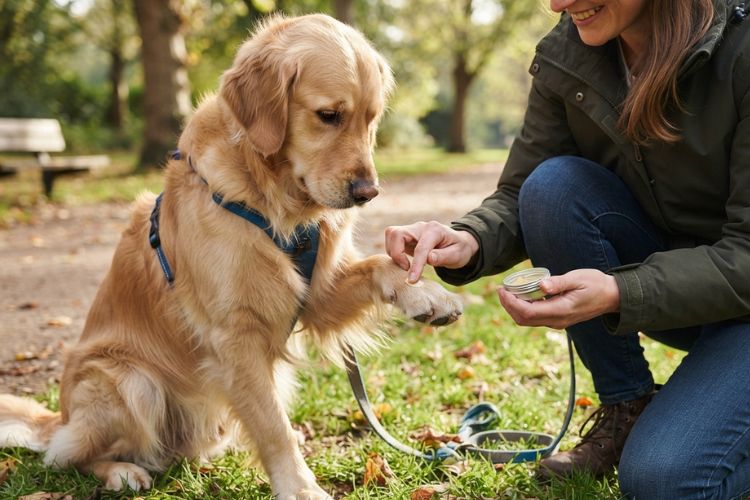
A few simple habits can reduce irritation. Check your dog’s paws after walks, especially when walking on unfamiliar surfaces. Gently clean them if they have been exposed to dirt, chemicals, or other irritants.
Keep nails at an appropriate length and watch for small cuts or changes in the skin. Regular parasite prevention can also reduce the chance of flea-related itching.
If your dog spends a lot of time outdoors, pay attention to seasonal changes. Noticing when the licking begins and what your dog has recently been exposed to can give your veterinarian helpful information.
Final Thoughts
There are many possible reasons behind repeated paw attention. Allergies are common, but injuries, infections, parasites, pain, and stress can all play a role.
If you’re trying to figure out why your dog keeps licking their paws, pay attention to when it happens and whether one paw or several are involved. Check for redness, swelling, or other changes in the skin. Some licking is normal, but frequent licking or chewing should not be ignored, especially if the paw starts to look sore or irritated.
Early attention can make it easier to identify the cause and prevent a small irritation from turning into a larger skin or paw problem.
FAQs
Why does my dog keep licking their paws?
Frequent licking can be caused by allergies, injuries, infections, parasites, pain, or stress. The appearance of the paw and any other symptoms can help identify the likely cause.
Is paw licking always caused by allergies?
No. Allergies are common, but a damaged nail, foreign object, infection, or painful paw can also cause repeated licking.
Why is my dog licking only one paw?
Focusing on one paw may suggest a localized issue such as a cut, sore nail, foreign object, or other injury. Check the paw carefully and contact your veterinarian if the behavior continues.
When is paw licking a concern?
Persistent licking, chewing, redness, swelling, odor, sores, discharge, or limping are reasons to have your dog examined by a veterinarian.