What is your dog trying to communicate without using words? Dogs express themselves through body movements, from small shifts in posture to the way they hold their tail. Learning to understand dog body language helps you recognize what your dog is feeling before it becomes obvious.
When you can notice these signals early, you are better able to respond in the right way. This helps prevent confusion or risky situations and also builds a stronger, more trusting connection between you and your dog in everyday life.
Why Your Dog’s Signals Deserve Your Attention?
Being aware of your dog’s signals helps you avoid miscommunication that can lead to anxiety or unwanted behavior. Many issues occur because subtle cues are ignored. When you recognize these signs early, you can handle situations calmly before they escalate.
This awareness also supports better training and smoother daily interaction. Dogs respond more positively when their feelings are acknowledged. Paying attention to their behavior improves communication and helps create a more balanced and trusting relationship.
How Dogs Show What They Feel Without Words
Dogs express their emotions through physical actions such as body stance, tail movement, ear position, and facial expressions. Even slight changes can indicate whether your dog feels comfortable, unsure, or alert in a situation.
For example, how a dog reacts during activities like dog jumping can show excitement or unease depending on its energy and posture. Observing these patterns regularly helps you understand your dog’s normal behavior and recognize any unusual changes quickly.
Basic Dog Body Language You Should Know
Understanding the basics of dog body language gives you a strong foundation for recognizing more complex signals. These signs appear in everyday situations and can help you understand your dog’s emotional state clearly.
– Body Posture and Movement
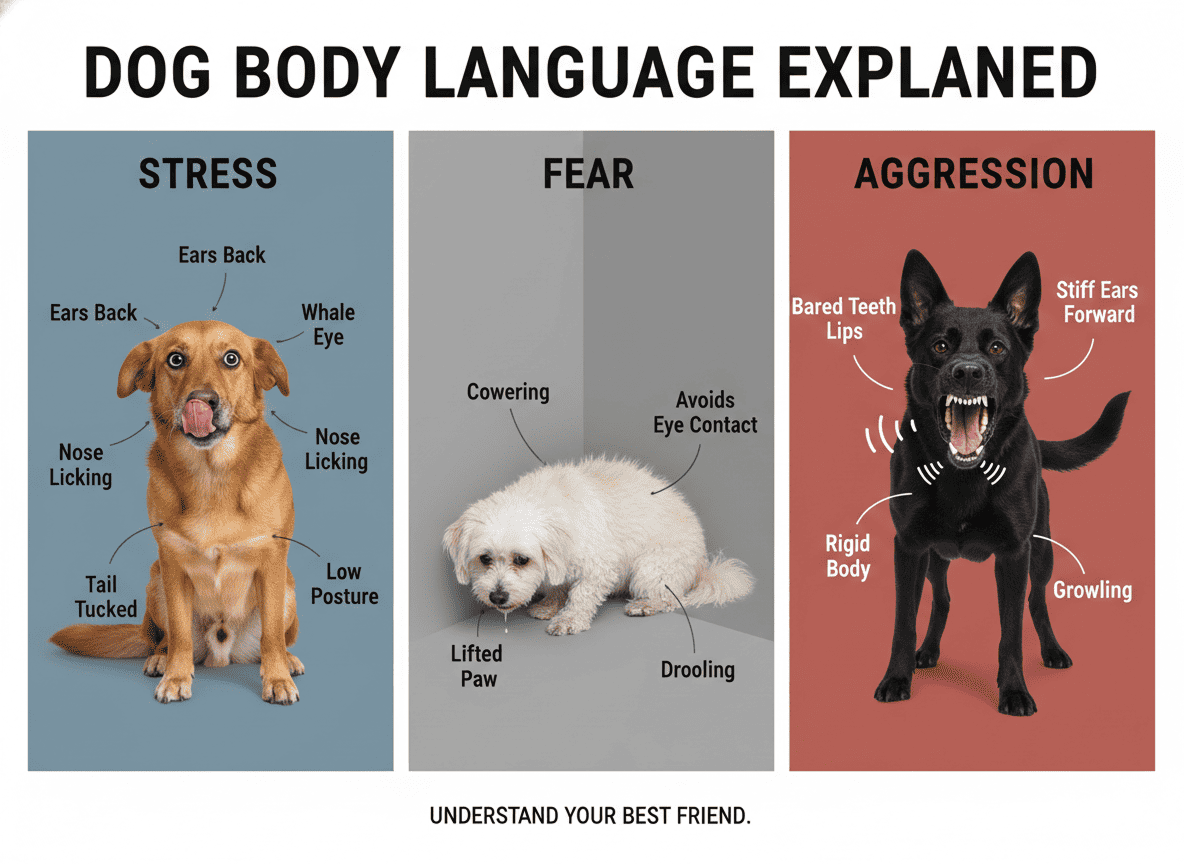
A relaxed dog has a loose body and natural movement. A tense dog appears stiff or frozen. Freezing is a serious dog behavior warning sign because it often comes before fear or aggression. Watching posture closely helps you react early.
– Tail Position and Movement
A wagging tail does not always mean happiness. A high and stiff tail may show alertness or dominance, while a tucked tail signals fear. Understanding these differences helps you interpret dog body language more accurately in different situations.
– Ears, Eyes, and Facial Expressions
Ears pulled back often signal discomfort, while forward ears show alertness. Wide eyes or visible whites can indicate stress. Even visual perception, like how dogs interpret surroundings through dog color vision, can influence how they react to different situations.
Signs Your Dog Is Feeling Stressed
Spotting stress early can save your dog from feeling overwhelmed. Dogs often show small changes in behavior before stress becomes serious. These signs are easy to miss, especially if you are not observing closely, but they are important signals that your dog is not fully comfortable.
– Early Signs of Stress
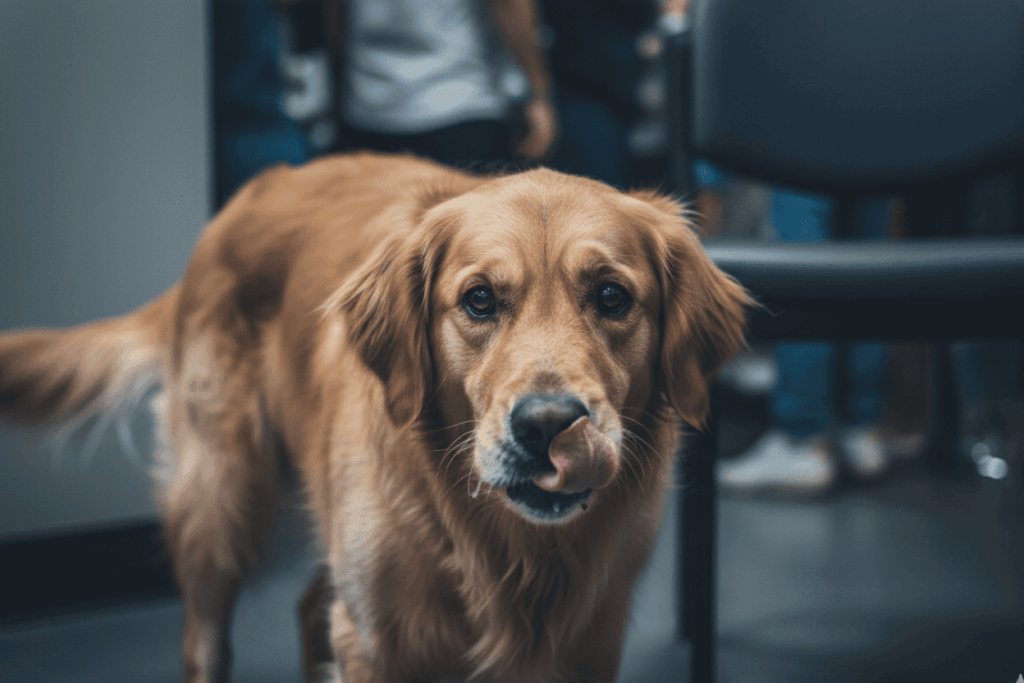
Mild stress usually appears through simple actions like yawning, lip licking, or panting even when your dog is not tired. Your dog may also look away or avoid eye contact. These quiet signals are your dog’s way of asking for space and comfort.
– When Stress Becomes More Noticeable
As discomfort continues, your dog’s behavior becomes easier to notice and harder to ignore. You may see repeated pacing, soft whining, or signs of uneasiness. The body can look tight, and movements may seem less natural. At this stage, your dog needs comfort and a calm space to feel safe again.
– What Can Cause Stress in Dogs
Many daily situations can make a dog feel uncomfortable or anxious. Loud noises, unfamiliar surroundings, and sudden changes in routine are common triggers. Being around strangers or in busy places can also increase tension. Understanding these factors helps you create a peaceful and supportive environment for your dog.
Signs Your Dog Is Afraid
Fear is stronger than stress and often leads to defensive reactions. Recognizing the signs of fear in dogs early helps prevent unwanted behavior.
– Clear Body Language of Fear
A fearful dog may crouch low, tuck its tail, and pull its ears back. It may try to make itself look smaller. These clear signs of fear in dogs show that your pet feels unsafe and needs reassurance.
– How Dogs React to Fear
Some dogs try to hide or escape when afraid. Others freeze and remain completely still. Freezing is one of the most serious dog behavior warning signs because it often comes before a reaction.
– Why Fear Should Not Be Ignored
Ignoring fear can lead to aggression. When a dog feels trapped, it may react defensively. Understanding fear early allows you to calm your dog and prevent situations from becoming dangerous.
Signs of Aggression You Should Never Ignore
Strong reactions in dogs rarely appear out of nowhere. They usually build up over time when earlier signs of discomfort or pressure are overlooked. Dogs often try to express how they feel before reacting, so noticing these changes early helps you handle the situation calmly and avoid risk.
– Early Warning Signs
Before behavior becomes intense, dogs often show small but clear signals. You might hear a quiet growl, see teeth slightly exposed, or notice a steady, focused stare. Their body may tighten, and they might pause or hold still. These signs mean your dog needs space and should not be pushed.
– Different Types of Aggression
Not all aggressive behavior comes from the same cause. Some dogs react out of fear, while others may guard their space or belongings. In some cases, they may try to protect what they see as important. Understanding the reason behind the reaction helps you respond in a safer and more thoughtful way.
– Serious Red Flags
More intense actions like lunging forward, snapping, or trying to bite are strong signals that should never be ignored. A tense body, raised tail, and sharp focus often show that the dog is highly alert. In these moments, it is best to stay calm, step back, and give the dog enough space.
How to Respond the Right Way
Your reaction plays a big role in how the situation develops. When your dog shows signs of stress, try to remove anything causing discomfort and create a peaceful environment. Giving your dog space allows it to settle down without feeling pressured.
If your dog seems fearful, let it approach situations slowly at its own comfort level. Avoid forcing interaction and use a gentle tone to reassure it. Building confidence takes time, but patience helps your dog feel safer and more relaxed.
In cases of aggressive behavior, staying calm is essential. Sudden movements or punishment can make the reaction stronger. Focus on safety and distance instead. If the behavior continues, getting guidance from a trained professional can help manage the situation properly.
Final Thoughts
Understanding dog body language helps you build a safe and strong relationship with your pet. By recognizing signs of stress, fear, and aggression, you can respond in the right way and prevent situations from becoming serious or harmful for both your dog and others around you.
With patience and regular observation, you can better understand your dog’s emotions and needs. This awareness allows you to create a comfortable and supportive environment where your dog feels secure, confident, and understood in everyday situations.
Not sure what your dog is trying to tell you or where to turn for help? North Bay Animal Services is here to support pet owners with guidance, care, and resources. Whether you are dealing with a lost pet, behavior concerns, or general animal care, they work to protect and support animals while helping families stay connected with their pets.
FAQs
How can I tell if my dog is stressed or just tired?
A tired dog usually looks calm and relaxed, often resting peacefully. A stressed dog behaves differently. You might notice lip licking, pacing, or avoiding eye contact. These small signs show your dog is uncomfortable and needs some space or reassurance.
Why does my dog wag its tail but still growl?
A wagging tail does not always mean your dog is happy. Sometimes it can show tension or uncertainty. If your dog is wagging its tail while growling, it is likely giving a warning and asking you or others to keep some distance.
Can fear lead to aggression in dogs?
Yes, fear can sometimes turn into aggression. When a dog feels scared and has no way to escape, it may react by growling, snapping, or even biting. This is usually a defensive reaction, not a sign of a bad or aggressive dog.
What should I do if my dog shows aggressive behavior?
The best response is to stay calm and avoid reacting suddenly. Give your dog space and do not punish it, as this can increase fear. If the behavior continues or becomes serious, it is a good idea to consult a professional trainer or behavior expert.
How can I help my dog feel more comfortable?
Creating a calm and stable environment makes a big difference. Keep a consistent routine, use gentle encouragement, and reward positive behavior. Over time, this helps your dog feel more secure, confident, and relaxed in different situations.